


Charge at Grow: Behind the Music with Common Ideal, The Glowworms and VERA SCARA
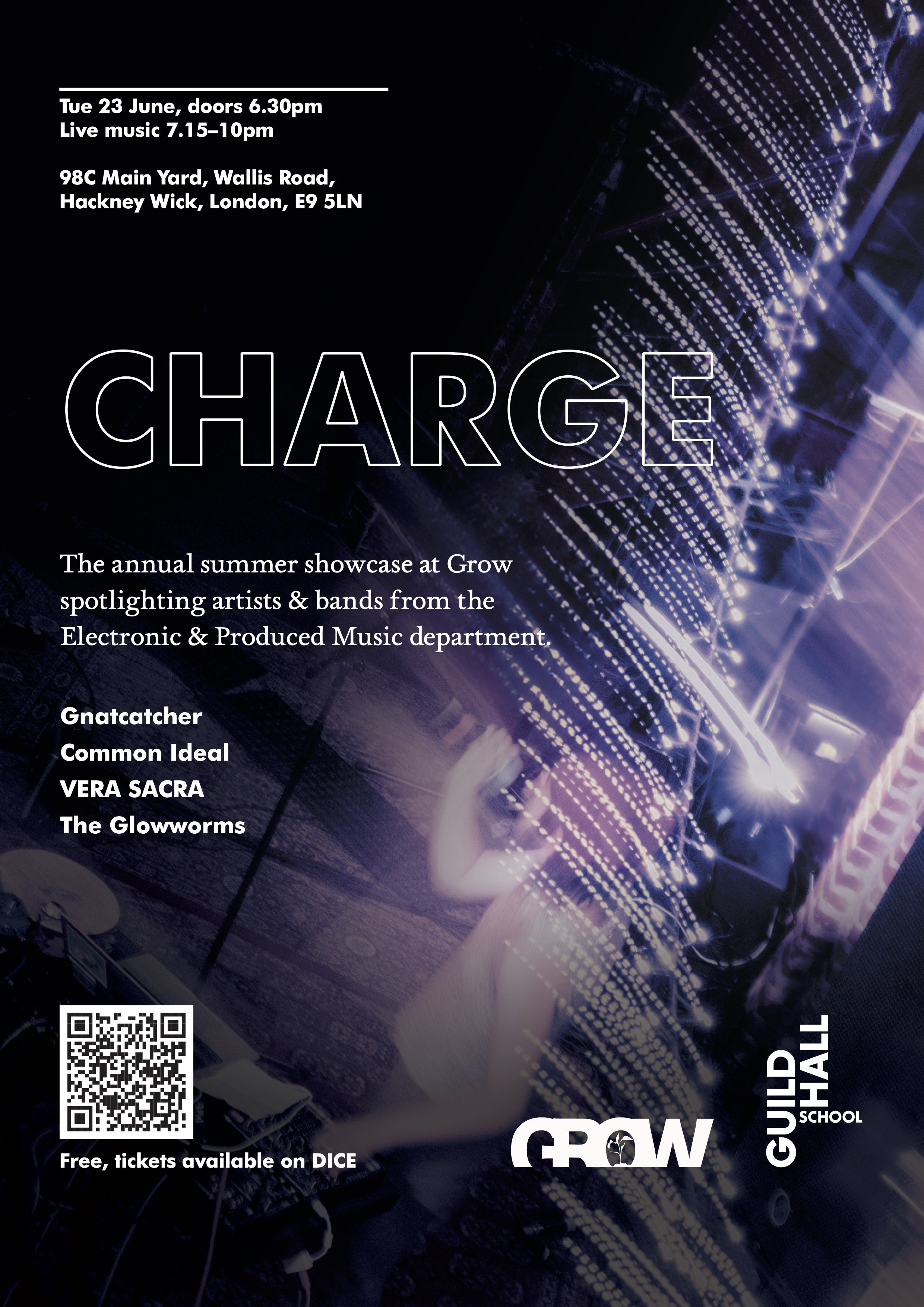
On Tuesday 23 June 2026, Guildhall School returns to Grow for Charge, its annual summer showcase from the Electronic & Produced Music (EPM) department..
Now in its third year, the free event brings together a new cohort of artists exploring indie rock, trip-hop-infused cello and vocal compositions, jazzy alt-pop and more. This year’s line-up features Common Ideal, VERA SCARA, The Glowworms and Gnatcatcher, with music running from 6:30pm to 11pm at Grow, Hackney.
Ahead of the show, we caught up with three of the artists, Common Ideal, The Glowworms and VERA SCARA, to talk about process, performance, Guildhall and the value of coming out for new music.
1. What first drew you towards making music, and what has shaped your musical identity so far?
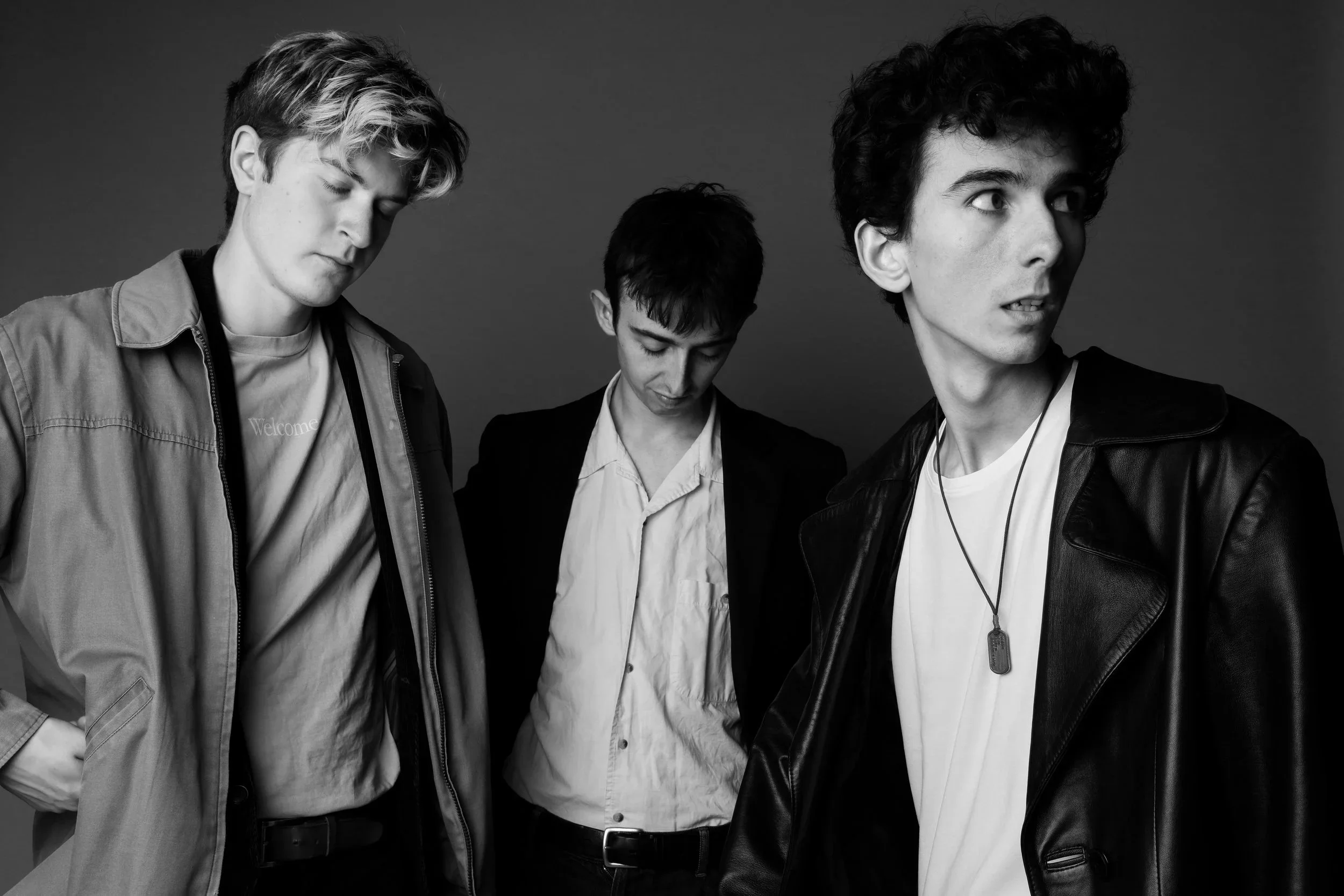
Common Ideal (Sal): I grew up in a very musical household. Despite my parents not being musicians, I have vivid memories of dancing around in the living room, with very loud music playing in the background. I always felt drawn to it. I would say the biggest factors that influenced Common Ideal’s sound are the various influences we have. I studied classical piano and composition; Aaron and Joe study jazz; we all love modern alternative rock; Aaron loves classic rock’n’roll; and Joe is very into electronic music. I think this is definitely something that shaped our music identity. And playing live! Being in the scene, watching other bands play, shaping our sound to fit the live context…
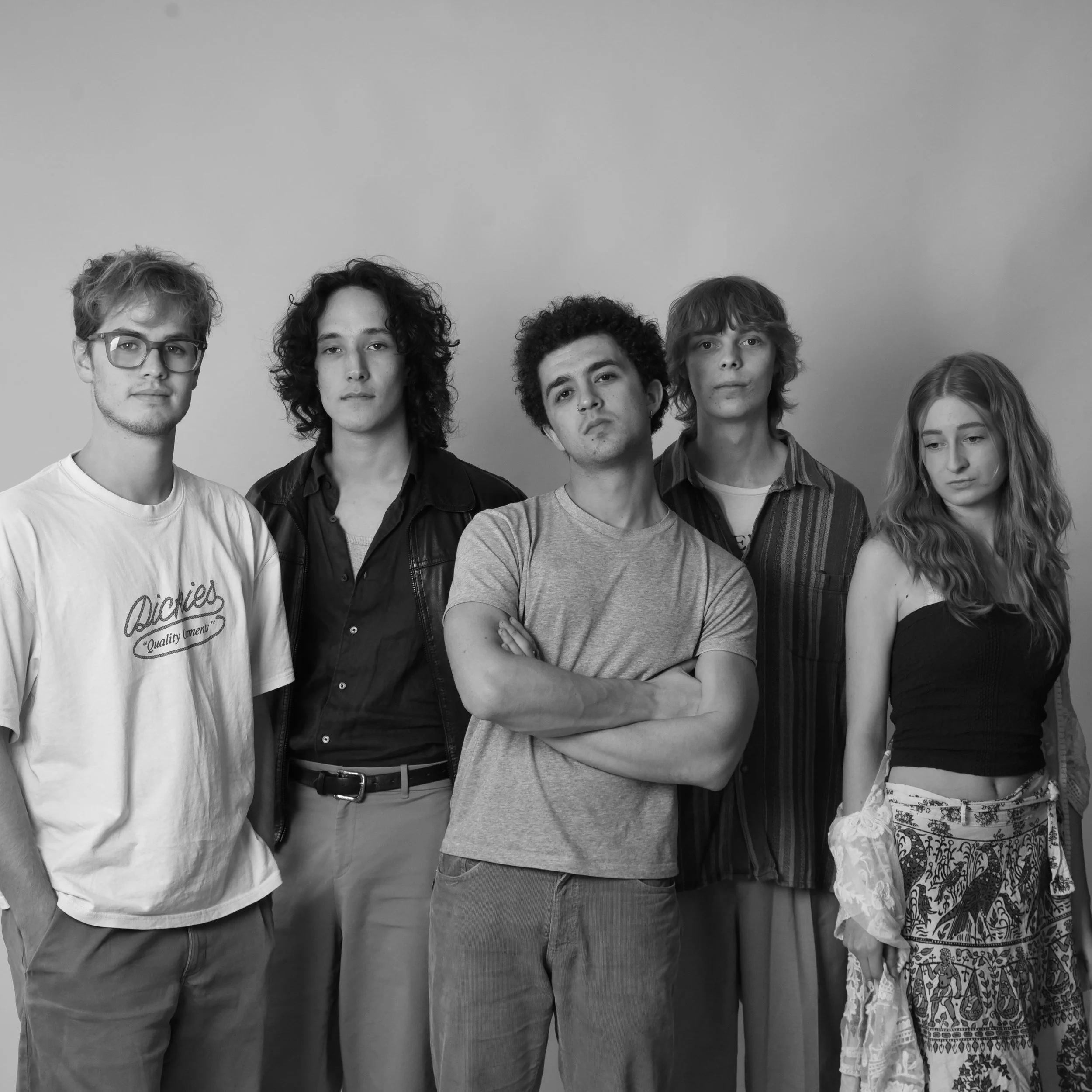
The Glowworms (Dan Fawcett): The social element of making music with other people was always the enticing thing about it! In quite a stereotypical way I grew up jamming in my mates garage, that definitely shaped the way I approach any musical setting now.
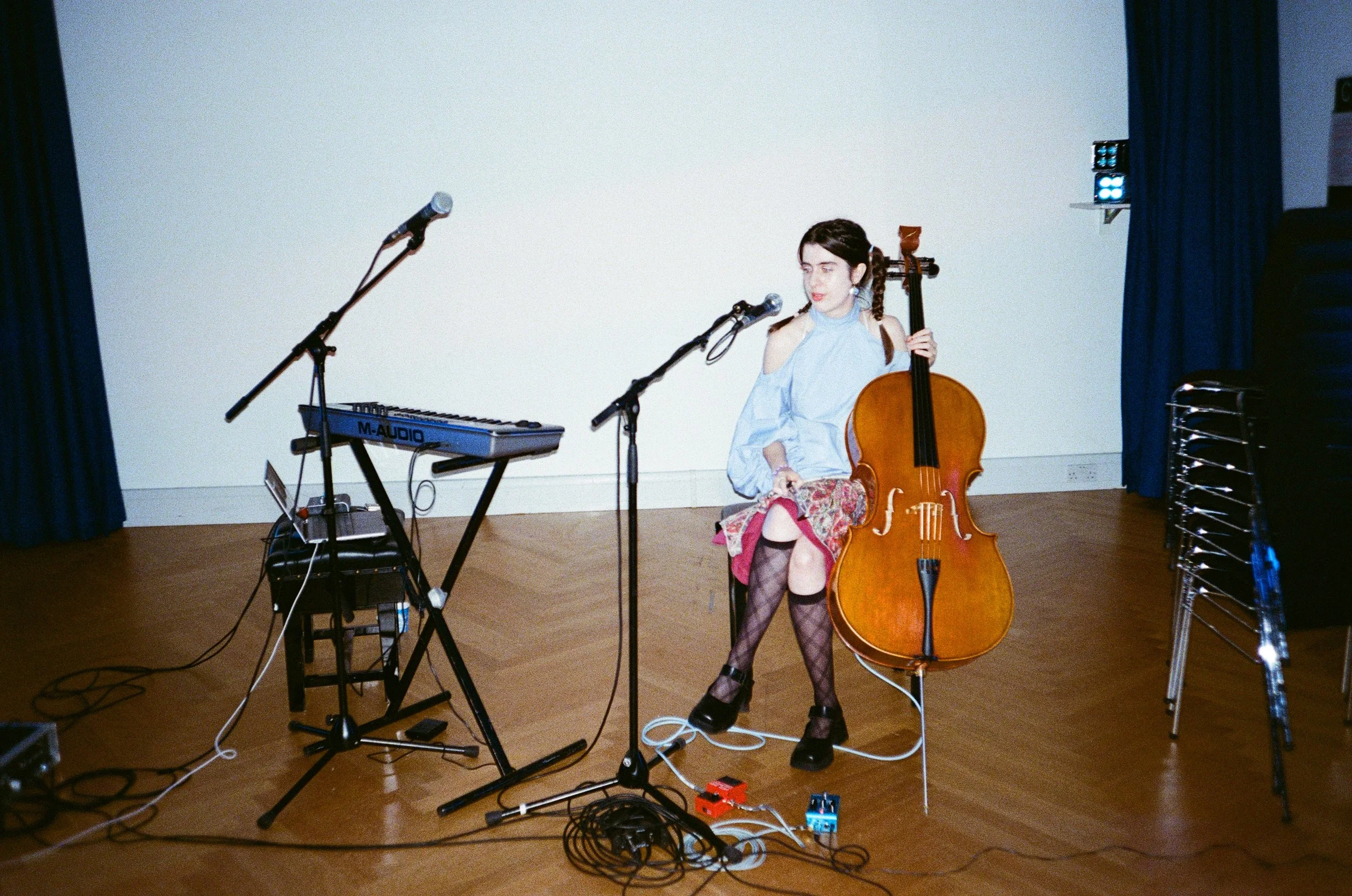
VERA SCARA: I’ve played music from a young age starting on cello playing in school orchestras in Sheffield and eventually going to a Saturday music school for several years in Manchester. I always struggled with practicing cello and the rigidity of some parts of the classical world. Despite playing mainly classical music, the music I was listening to was completely different and I felt a kind of rift between the music I played and the music I enjoyed. I grew up on lots of things, from heavier music like Bring Me the Horizon and Opeth to Broadcast, The Velvet Underground, Diiv, Nick Drake and Sneaker Pimps. I also spent a lot of time going to sweaty gigs in Sheffield, seeing bands like Drenge at Plug (RIP). In my later teens I discovered electronic music and found a love for dance music and large sound systems in Sheffield, from festivals like No Bounds to weird semi-legal basement and warehouse parties. People from where I grew up rarely move to London, let alone to study art or music, so I’ve always felt like I’ve been playing catchup a little bit in the scene here. I think this feeling of being a bit of an outsider has informed my musical identity quite a lot, even in Sheffield I feel like my time spent in London has now made me view the city with different eyes.
2. Have any creative exercises, briefs or constraints from the course pushed your music in a direction you didn’t expect?
Common Ideal (Sal): I would say being at Guildhall will always bring new perspectives on music. I never really hung out with jazz musicians/students before coming here, and making rock music with them is a new challenge in itself!
The Glowworms (Dan Fawcett): Using outboard analog gear when recording and mixing our music has definitely brought more of a hands-on approach to our music than we would have expected. It’s been very interesting delving into that world.
VERA SCARA: This year I ended up writing a piece ‘for Organ and Cave’ which involved taking field recordings in the Dark Peak cave system near home in Sheffield. I then worked with an organist to compose an ambient piece exploring the feeling of the caves.
3. How has your sound or creative process changed during your time at Guildhall?
Common Ideal (Sal): I would say the creative process became much more collaborative. Being surrounded by amazing musicians, I think it wouldn’t make sense to tell a drummer or bassist exactly what to do with their instruments. I think there is so much to gain from making music with such good instrumentalists.
The Glowworms (Dan Fawcett): After having gone through some lineup changes last year, the music and especially the live show features more improvisation around the arrangements. Songs like Cally Park can lead in different directions on each gig which is really exciting!
VERA SCARA: I’ve not been at Guildhall long, but I think I’ve definitely gained many skills in the studio just from meeting friends and watching them work on their songs.
4. How does live performance enter into your creative process? Do you think about the stage while writing or producing?
Common Ideal (Sal): Absolutely! Being a rock band that plays big riffs, with lots of distortion, accompanied by soaring/anthemic melodies, we always think that the bigger the stage, the better suited our music will be. Our goal is to conquer the biggest stages in the world, so I think it wouldn’t make sense not to think about the stage when we write!
The Glowworms (Dan Fawcett): We treat the record and live show quite separately, however there are parts of our recorded songs that came from live improvised takes, and these will often become concrete parts of songs when we work out how to play them live. At the moment we’re working on finding the best way of presenting some of the new recorded material in a live setting, which can be quite a challenge, but it’s fun when a song morphs into something unexpected.
VERA SCARA: I’ve been performing live for around 4 years now and it’s definitely impacted how I write music. I find that my more stripped back stuff often works really well live, but I love producing more electronic tracks. The more produced elements a track has, the more difficult it is to perform live, so I think I’m trying to find a balance between the two worlds. I think a good backing track on a good soundsystem can be great, but I also think if people see you live they want something they wouldn’t get just from listening at home. It’s still something I’m working on.
5. How different is your live set from your recorded music, and what changes when you bring the work into a room with an audience?
Common Ideal (Sal): I would say our live sound is much more raw. Being a 3-piece, there isn’t much to protect or shield you from being very exposed. Everything we play can not only be heard, but also it’s all you will hear! I love finding new sounds and getting creative in the studio, but it’s hard to bring all those elements to a live performance, which I think is exciting!
The Glowworms (Dan Fawcett): I find that it’s not always possible to get the same effect from parts and riffs live as on the record, as there you can tweak the volumes of different tracks endlessly so that everything feels great, but that’s not always possible live. Sometimes I decide a section of a track just needs me playing some big chords rather than the part that was originally in the recording.
VERA SCARA: It depends which songs. My stripped back songs are almost identical to my live versions, but my more electronic ones are quite different. I’ve also been working with a drummer/synth player Anton Sconosciuto and violinist Isaac Pross who have added a whole new dimension to my live sets. It’s been fun creating new arrangements for songs I’ve previously played solo. I love improvising, and being able to improvise with other performers has added so much more energy to my sets.
6. Are there any particular sounds, tools, instruments, plugins or pieces of hardware that have become central to your practice?
Common Ideal (Sal): Well, we love our pedals! Getting new tones and crafting our own sound using our pedals is definitely something we spend time on. I would love to explore adding more sounds to our live performance to create more diverse and versatile sound palettes.
The Glowworms (Dan Fawcett): My Walrus Audio reverb pedal gets a lot of use throughout any live set, the momentary sustain button is constantly in use. I know that Dov likes granular effects a lot as well, and we had some fun recently using the SketchCassette plugin to really crunch up and destroy some of his vocals.
VERA SCARA: My Boss RC-1 is the backbone of my cello-led tracks. I use it almost to live sample my cello and create large textures which I then mess with on my other pedals. I also use my laptop and this software called VST Live to play tracks and my synth parts live.
7. What has been one of the biggest creative or technical challenges in developing your music, and how have you worked through it?
Common Ideal (Sal): I would say that, as I mentioned, the duality of being a 3-piece, power trio type band makes it harder to get a continuous sound from the live context to the studio and vice versa. I feel like it’s the type of challenge that we will carry as a band until the end of our days! But once again, I think it’s part of what makes making music so exciting!
The Glowworms (Dan Fawcett): We’ve always wanted to develop an immersive visual world to accompany our music and that’s been tricky to do, however recently we’ve been working with some amazing friends to make videos like the one we made for our recent single ‘Those Things’, which features a dance competition gone wrong…
VERA SCARA: The biggest challenges have been more personal ones from a lack of money to imposter syndrome and constant comparison. Making friends at Guildhall has helped a lot and I feel a lot less alone than before I started.
8. Why is it important for people to come out and support emerging artists, student showcases and grassroots venues?
Common Ideal (Sal): The small artists of today will be the big artists of tomorrow. Everyone plays a role to fulfil this premise. A band needs an audience just as much as an audience needs a band. We were gifted with this amazing experience that is music, so I believe that supporting emerging artists and grassroots venues is the most active way a person has to promote and protect the music they love. How many times have you not come into a venue and thought, “these guys are gonna go far!” I think it’s up to us as an audience to make “those guys go far”. I’m a big believer that music is made by people to people, and not something that is decided by some corporate person in charge of deciding which artist the whole world is gonna listen to!
The Glowworms (Dan Fawcett): It’s such a great way of discovering new music! Some of our favourite grassroots venues provide a perfect space for musicians to try out new ideas and sounds, and have built a large regular audience because people love to see these kind of shows.
VERA SCARA: There is so little money in streaming so paying to see artists live and buying their merch/physical releases is really important if you love music. I think going to random gigs is a great way to find new artists as well, rather than relying on streaming algorithms. Supporting grassroots venues is essential for the industry because of the space they give to allow you to experiment and try out new things.